
 英语
英语
 汉语
汉语
Welcome to Our Blog - ITG Group
博客
- 创新
- Oct 17, 2025
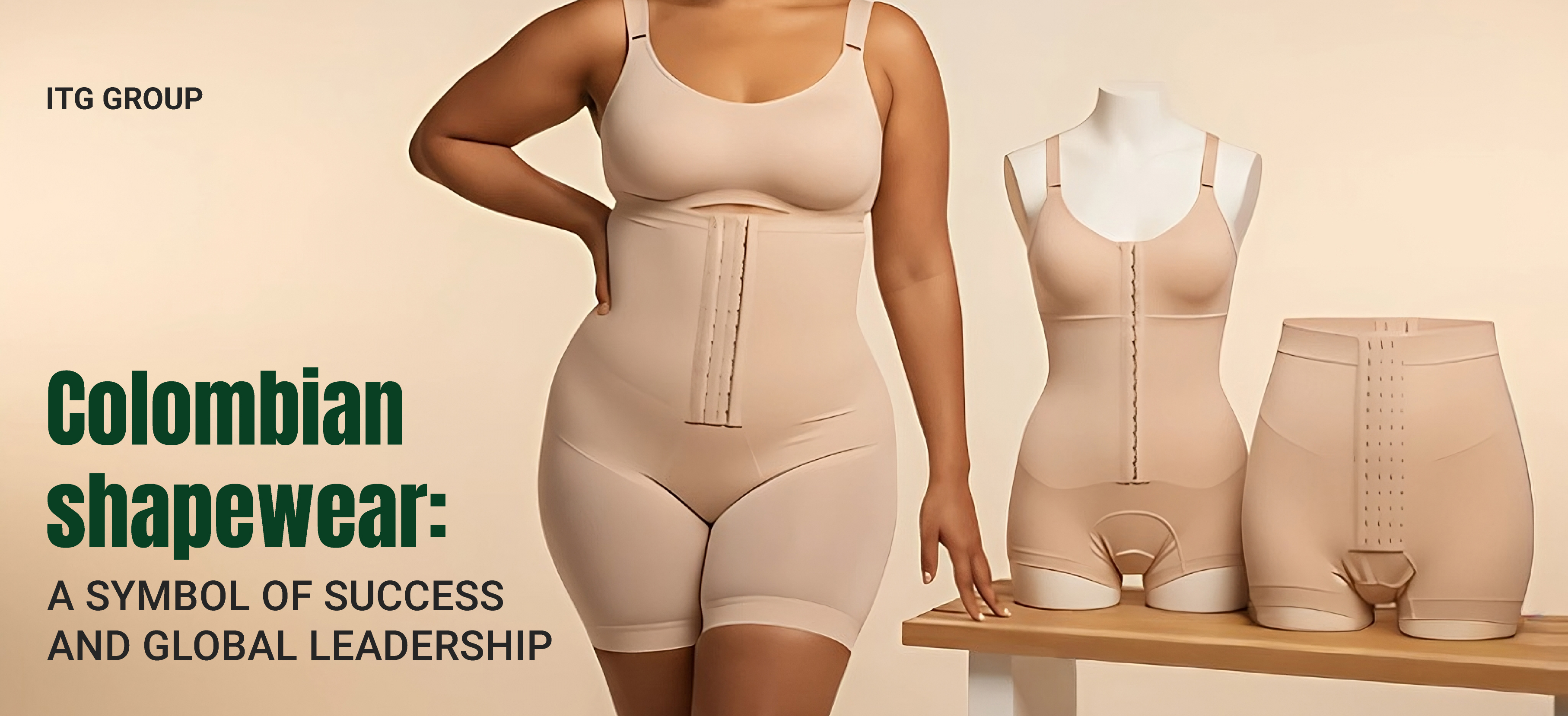
Colombian shapewear: a symbol of success and global leadership
Shapewear has become one of the flagship products of Colombian fashion. The country is not only recognized for its creativity and quality in clothing manufacturing, but has also established itself as the leading exporter of shapewear garments in the Americas and the second largest worldwide, behind only China.
This leadership was not achieved overnight. Since its inception, when so-called “cinturillas” (waistbands) were the most common items, the industry has evolved into a diverse portfolio that includes bodysuits, control jeans, sets, and one-pieces. Today, these garments not only serve an aesthetic function, but also have medical and post-operative applications, further expanding their market.
According to figures from DANE, in 2024 Colombia exported more than 1,300 tons of shapewear and control garments, with a value of over $54 million. The main destinations for these exports are the United States and Mexico, markets where Colombian design, quality, and innovation have been widely accepted. In addition, the sector has managed to maintain annual business of more than $55 million on average, demonstrating its stability and capacity for growth.
The success of shapewear is part of a broader context: the sustained growth of the Colombian fashion industry. According to figures from Inexmoda, in the first half of 2025, the country recorded a 3% increase in its textile and fashion exports. Colombia leads South America in the export of products such as underwear and jeans, ranks first in flat fabric garments in the region, and is the leading exporter of swimwear in South America and the second largest in Latin America and the Caribbean. These figures reflect a sector that has grown by 7% in the last five years, consolidating itself as an economic engine and ambassador of national innovation.
In this ecosystem, knitting looms play a key role in the creation of high-quality fabrics for the manufacture of shapewear. ITG Colombia, as a leading company in textile machinery, offers knitting looms that allow companies to produce fabrics with elasticity, resistance, and comfort, essential characteristics for control garments that conquer international markets. This technology ensures that manufacturers can offer a competitive, high-quality end product.
The international recognition of Colombian shapewear is due to several factors: the use of quality raw materials, the development of state-of-the-art textile technologies, and the ability of designers and manufacturers to combine functionality with aesthetics. In addition, the rise of trends related to wellness, functional fashion, and sustainability has further boosted demand.
In conclusion, shapewear is not just a successful product: they represent the ability of Colombian fashion to compete and lead on the global stage. With constant innovation, entrepreneurial vision, and a commitment to quality, this segment will continue to be a source of pride for the country and an opportunity for growth in the textile and apparel industry.
Source: https://co.fashionnetwork.com/news/Las-fajas-y-prendas-de-control-colombianas-al-alza,1763442.html
- 创新
- Sep 11, 2025
Smart Dyeing: How AI Cuts Waste in Textiles
In conventional dyeing, colors are applied to wet fabrics—with unpredictable shifts occurring during drying. These non-linear color changes often lead to dyeing errors that can only be detected late in the process. As Jasper explains, by the time these mistakes surface, entire batches may need re-dyeing, contributing to massive material and resource waste.
To tackle this issue, Jasper and his team developed five machine learning models to map the complex transition between wet and dry color states. Their neural network stood out with exceptional accuracy: a CIEDE2000 error as low as 0.01 and a median error of 0.7, well below the industry’s typical acceptability threshold of 0.8–1.0. In comparison, traditional methods produced errors up to 13.8—demonstrating the vast improvements possible with machine learning guidance.
This AI-driven prediction enables manufacturers to identify and correct color deviations early, reducing re-runs, minimizing resource waste, and saving time and cost across production workflows.
Machine learning isn’t only enhancing color accuracy. Numerous textile manufacturers are leveraging AI and ML for real-time monitoring, resource optimization, and predictive maintenance. AI systems analyze data from dyeing equipment to ensure consistent temperature, chemical balance, and application uniformity—drastically improving efficiency and reducing downtime.
By using models trained on historical data, AI algorithms accurately forecast energy and water usage and optimize formulations to avoid overuse. Coupled with automation, this enables dramatic reductions in chemical and resource consumption, supporting sustainable production standards.
Given the environmental footprint of traditional dyeing—particularly its high water, energy, and chemical demands—machine learning models offer a powerful solution. With improved prediction and real-time response, factories can significantly reduce waste, lower carbon emissions, and limit harmful chemical runoff. These practices align with ethical and regulatory demands across global markets.
Moreover, optimizing dyeing operations through AI translates into business advantages: reduced material costs, fewer quality control failures, faster turnarounds, and higher product consistency. This positions brands and manufacturers to deliver better value while meeting customer and regulatory expectations for sustainability.
While promising, widespread adoption of machine learning in textile dyeing is still emerging. Challenges include the need for robust data collection, integration with existing systems, and investment in AI-ready infrastructure. But as textile makers continue to digitize operations and gather production data, the path is clear for scalable, intelligent dyeing processes that deliver reliability and resource efficiency.
At ITG Group, we recognize the transformative potential of machine learning in textile dyeing. While we continue monitoring these innovations, our goal is to help our clients stay ahead through efficient, high-quality textile production. By offering machinery, spare parts, and advisory support tailored to each of our clients needs, we aim to empower them to produce fabrics that lead the market. We’re your commercial ally in the textile industry, committed to weaving success together.

- 创新
- May 29, 2025
Redefining Consumer Priorities: The Rise of Quality Fashion
In recent years, the fashion industry has witnessed a significant shift in consumer preferences, with a growing emphasis on quality over quantity. This movement, often referred to as "quality fashion," reflects a deeper awareness among consumers about the environmental and ethical implications of their purchases. As a result, the future of fashion is being redefined by a commitment to durability, sustainability, and timeless design.
The traditional fast-fashion model, characterized by rapid production cycles and disposable clothing, is increasingly being scrutinized for its environmental impact and contribution to waste. In response, consumers are gravitating towards brands that prioritize high-quality materials and craftsmanship. This shift is not merely about aesthetics but represents a broader commitment to sustainability and ethical production practices.
Brands like Stella McCartney have set the standard for sustainable luxury fashion by utilizing eco-friendly materials, reducing waste, and promoting transparency. Such initiatives resonate with consumers who prioritize environmental responsibility, reinforcing the idea that quality fashion is synonymous with ethical practices.
Sustainability and quality are becoming increasingly intertwined in the fashion industry. High-quality garments tend to have longer lifespans, reducing the need for frequent replacements and thereby minimizing waste. Consumers are recognizing that investing in well-made pieces not only offers better value over time but also aligns with environmentally conscious values.
The European Commissions Sustainable and Circular Textile Strategy emphasizes that textiles sold in the EU should be durable, repairable, and recyclable, encouraging a move away from fast fashion towards more sustainable consumption patterns.
Advancements in technology are playing a pivotal role in the evolution of quality fashion. Innovations such as 3D knitting and digital printing allow for precise manufacturing, reducing waste and enhancing the quality of the final product. Additionally, technology enables greater transparency in supply chains, allowing consumers to make informed choices about the origins and production methods of their clothing.
The rise of the secondhand apparel market further underscores the shift towards quality. According to a report by ThredUp, the global secondhand clothing market is projected to reach $367 billion by 2029, growing 2.7 times faster than the overall apparel market. This trend indicates a growing consumer preference for durable, high-quality items that retain value over time.
The rise of quality fashion signifies a transformative period in the industry, where consumer priorities are increasingly aligned with sustainability, durability, and ethical production. As technology continues to evolve and awareness grows, the focus on quality over quantity is reshaping the way clothing is designed, produced, and consumed. At ITG Group, we share this commitment to quality—not only in fashion but in every machine, spare part, and accessory we offer. Our goal is to support our clients in producing high-quality fabrics that keep them ahead of their competitors in the textile sector. We are your commercial ally in the textile industry, dedicated to helping you weave success.
Information obtained from:
https://www.globaltextiletimes.com/articles/quality-fashion-the-future-of-consumer-trends/
- 创新
- Dec 12, 2024
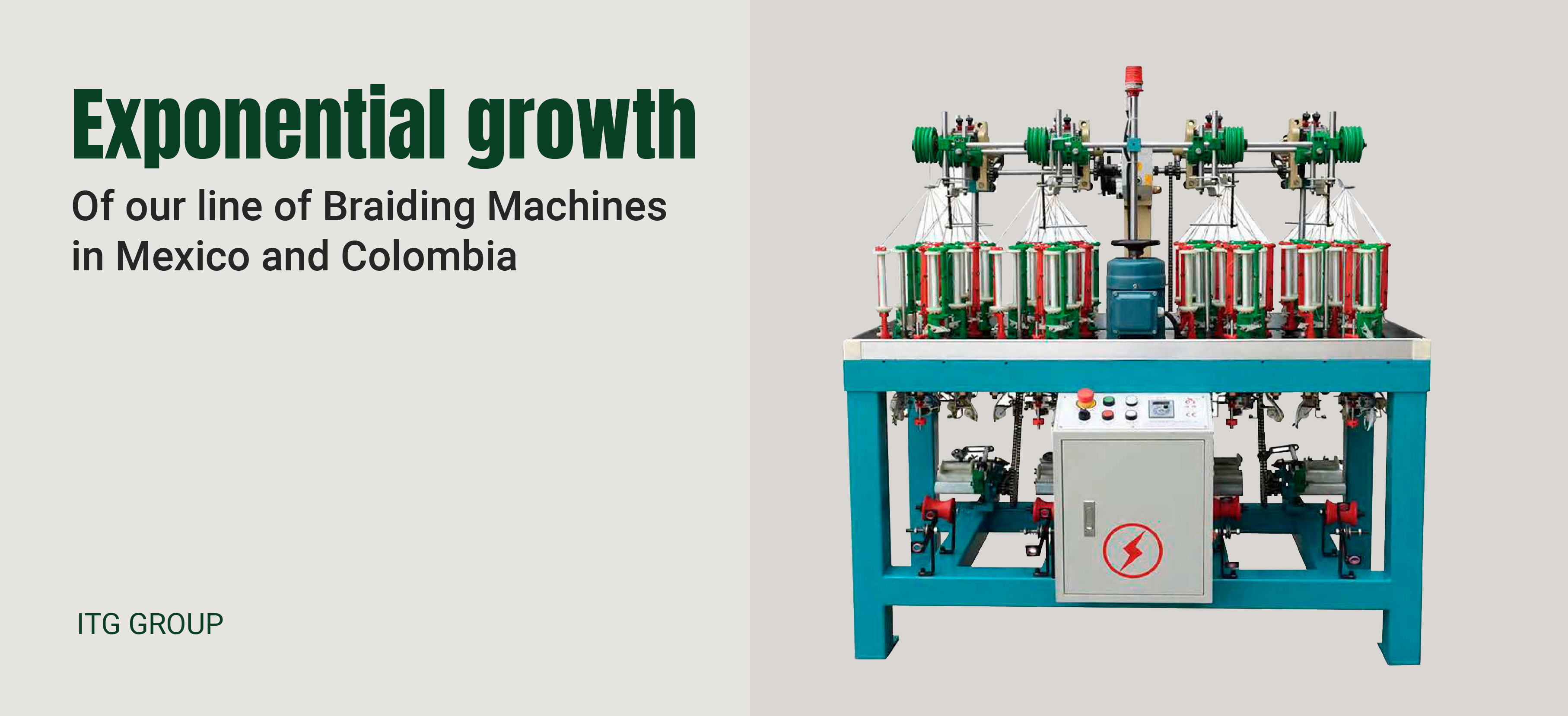
我们在墨西哥和哥伦比亚绳编机产品线的指数增长
在ITG集团,我们自豪地宣布我们在墨西哥和哥伦比亚市场绳编机产品线的显著增长。这一进展不仅代表我们业务的显著增加,还巩固了我们在两国纺织行业的领导地位。
为了更好地为客户服务并满足他们的需求,我们扩展了我们的产品组合,包括绳编行业的特定备件和供应品。这种多样化使我们能够提供完整而强大的解决方案,确保客户运营的效率和耐用性。
我们参加诸如Exintex和ANPIC等多个纺织品展会对于这一增长至关重要。这些展览为我们提供了一个平台,实时展示我们创新的绳编机、尖头机、绕线机等的效果。客户的接受程度非常高,不仅突显了我们机器的质量,还显示了我们竞争力价格和出色技术服务的优势
客户的积极反应来得很快。我们收到了大量的重复订单,导致不断进口装满绳编机的集装箱以满足需求。这种持续的活动反映了客户对我们机器质量和可靠性的信心,以及我们提供卓越服务的承诺。
这一成功的支柱之一是我们与恒辉绳编机的战略联盟,后者授予我们在墨西哥和哥伦比亚的独家代表权。这种合作使我们能够加强我们的产品供应,并确保我们为客户提供尖端技术和有效解决方案。
我们绳编机产品线的增长只是开始。我们致力于进一步扩展这条产品线,并探索新的市场。我们继续创新,并寻找方法来改进我们的服务和产品,以保持纺织行业的领先地位。