
 英语
 汉语
Welcome to Our Blog - ITG Group
博客
- Technical
- Jun 09, 2026
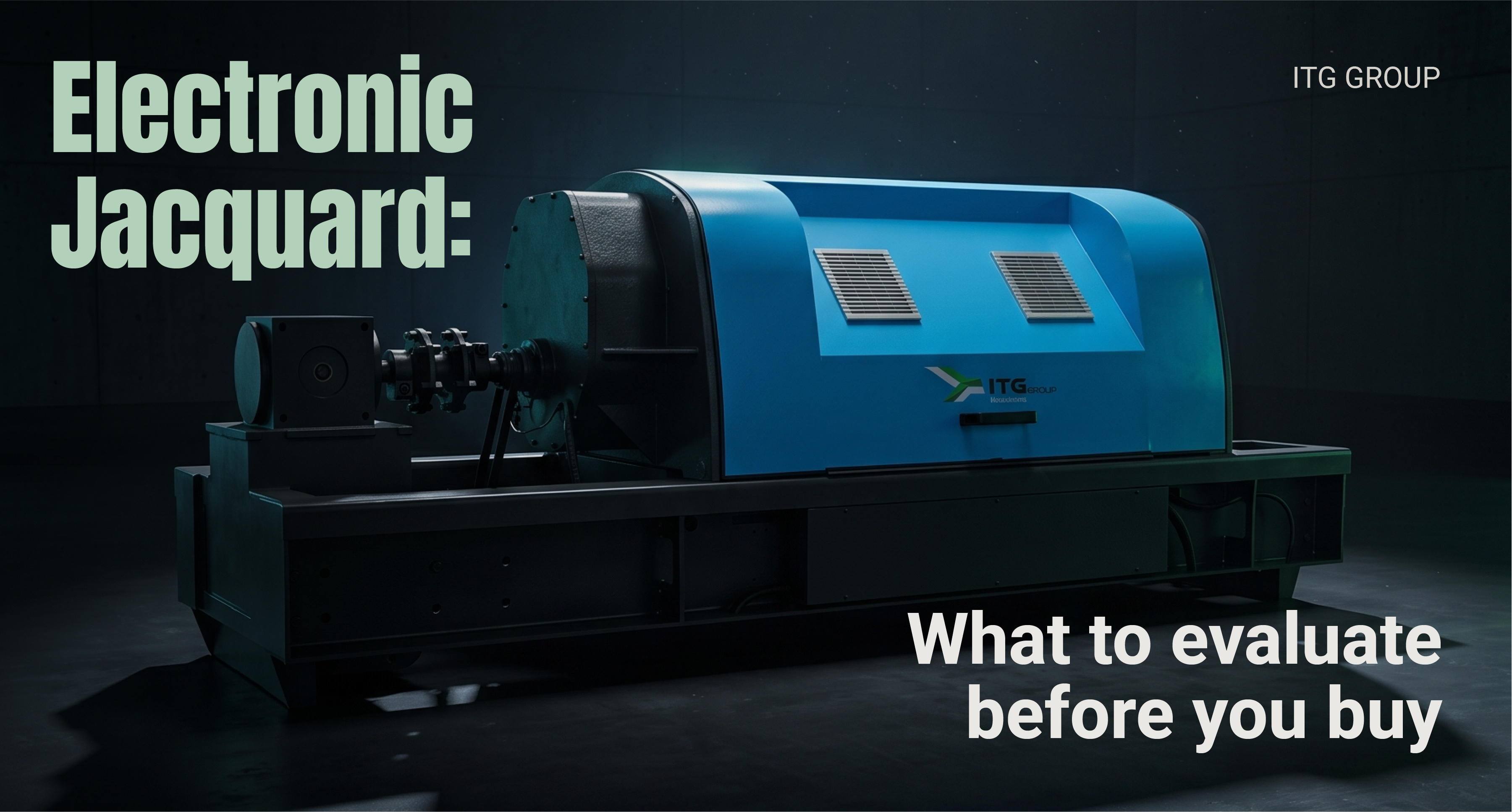
Electronic Jacquard: What to Evaluate Before You Buy
Specifying an electronic jacquard system isn't a straightforward purchase decision. Two systems can share the same hook count, run on the same loom, and produce the same fabric — and still deliver completely different results in daily production. The difference lies in four technical parameters that most spec sheets don't put front and center: drive mechanism, controller architecture, shedding geometry, and compatibility envelope.
Drive mechanism
The drive system is the most consequential technical decision in a jacquard specification. It directly determines maximum operating speed, vibration profile, maintenance intervals, and the types of fabric the system can reliably produce.
Bilateral eccentric cam — This is the highest-performance drive architecture currently available in electronic jacquard. The cam acts on both sides of the mechanism simultaneously, distributing load symmetrically and eliminating the unbalanced forces that cause vibration at high speeds. The result is stable operation at up to 650 RPM — the threshold at which most double-chain or gear systems begin to degrade in consistency. For mills running air jet or high-speed rapier looms, this is the only drive type that keeps pace without compromising shed quality.
Double chain system — A proven architecture for medium-speed environments, the double chain delivers reliable double-lift full-shedding performance at up to 300 RPM. Its mechanical simplicity translates to fewer failure points and predictable maintenance cycles. The trade-off is an upper speed ceiling that makes it unsuitable for high-speed shuttleless looms running above that threshold.
Gear drive — The most mechanically straightforward of the three, gear transmission is optimized for low-speed operation up to 250 RPM. Its compact footprint makes it the practical choice for mills with constrained floor space or lower production volumes. Three shedding types are supported — 95/95, 115/115, and 95/115 — giving it more shedding geometry flexibility than its speed range might suggest.
Controller architecture
Speed and mechanical stability determine the ceiling of what a jacquard system can do. The controller determines how much of that ceiling you actually use in daily production.
The shift from proprietary industrial controllers to Windows-based systems with optical transmission and dual-core processing has fundamentally changed two things: design changeover time and fault resolution speed.
Design changeover. A Windows-based controller running EP and JC programs natively means new patterns load directly from standard design software without format conversion or reprogramming. For mills running short production runs or managing multiple buyers with different specifications, this directly impacts how many articles a loom can produce per shift.
Fault diagnosis. Dual-core processing enables real-time monitoring of needle-selecting performance, shed formation consistency, and drive system status simultaneously. When a fault occurs, the system can isolate the cause and display it immediately rather than requiring manual inspection across mechanical components. In practice, this means the difference between a 10-minute intervention and a two-hour troubleshooting process.
Anti-interference performance. In multi-machine environments — which describes most production mills — electromagnetic interference between looms is a real operational variable. Industrial-grade controller systems with dedicated anti-interference transmission architecture maintain signal integrity across the full hook array even when adjacent machines are running at full speed.
Shedding geometry
Shedding size — the distance between open and closed shed positions — is rarely the first number buyers look at, but it has direct consequences for warp tension management and fabric quality consistency.
The 50–120mm shedding size range supported by bilateral eccentric cam and double-chain systems covers virtually the full spectrum of flat fabric production: home textiles, garment fabric, towels, ties, and technical fabrics. The adjustment mechanism matters as much as the range: a fast, simple knife height-adjustment system and quick opening dimension-adjustment system allow operators to optimize shed geometry for each article without extended downtime between changeovers.
For gear-drive systems, shedding sizes of 95/95, 115/115, and 95/115 provide a defined but sufficient range for the fabric types these systems are designed to produce — primarily flat fabrics, terry cloth, and label applications on low-speed rapier and shuttle looms
Compatibility: mounting a jacquard on your existing loom
The commercial case for electronic jacquard in mid-sized mills often rests on the ability to add capability to existing machinery rather than replacing it. That requires honest compatibility assessment across three variables.
Loom type. Bilateral eccentric cam systems are compatible with rapier, air jet, water jet, and shuttle looms — a full compatibility envelope. Double-chain systems are designed for rapier and shuttle looms. Gear-drive systems target low-speed rapier and shuttle configurations specifically.
Operating speed. The jacquard system's maximum RPM must match or exceed the loom's operating speed. Installing a 300 RPM-rated double-chain system on a loom running at 450 RPM will produce inconsistent shed formation and accelerated mechanical wear — two outcomes that eliminate any production efficiency gains.
Hook count relative to fabric width and pattern complexity. Hook count determines the maximum pattern resolution available at a given reed width. A system with insufficient hooks for the intended fabric width produces visible pattern repeat limitations regardless of how capable the controller is. The range from 480 to 15,360 hooks across the ITG Group line covers single-width label production through wide-width complex jacquard for upholstery and automotive applications.
Market context and ROI
The global jacquard fabric market was valued at $3.45 billion USD in 2024 and is projected to reach $5.67 billion USD by 2033, growing at a CAGR of 6.5%. That growth is distributed across fashion, home textiles, automotive interiors, and technical fabrics — meaning jacquard-capable mills have multiple end markets to address from a single capital investment. Verified Market Reports
Electronic jacquard adoption is accelerating across mid-scale mills, democratizing complex pattern production previously limited to premium heritage manufacturers. The economics are straightforward: jacquard fabric commands a price per meter that plain equivalents cannot reach using the same loom and labor. Mills implementing digital jacquard systems report reduced downtime, lower maintenance costs, and increased production yields compared to older technologies. OpenPRTextile School
The honest qualification: the return is proportional to the mill's ability to access buyers who pay for design complexity. The machine enables the margin — it doesn't create the commercial relationship.
ITG Group's solution
ITG Group offers the GE/GES, DL/DLS, and GYJ families, each matched to a specific operational profile.
The GE/GES runs up to 650 RPM on a bilateral eccentric cam drive with a Windows-based controller, optical transmission, and dual-core processing. Compatible with rapier, air jet, water jet, and shuttle looms. Available from 1,824 to 15,360 hooks. The right specification for high-speed mills producing complex articles across wide widths.
The DL/DLS runs up to 300 RPM on a double chain drive with an industrial-grade anti-interference controller. Designed for rapier and shuttle looms in stable medium-speed production environments. Available from 1,408 to 2,816 hooks.
The GYJ runs up to 250 RPM on a gear drive with a compact frame built for space-constrained factories. Supports three shedding geometries. Available from 480 to 6,912 hooks. The most accessible entry point into electronic jacquard production without sacrificing core design capability.
All three systems support EP and JC design programs, feature tool-free shed opening adjustment, and include fast-diagnostic controllers for minimal downtime during fault resolution.
If you're evaluating jacquard compatibility with your current loom configuration, ITG Group's technical team can assess your specific setup and recommend the right system. The analysis starts with what you already have.
Sources: Verified Market Reports, DataHorizzon Research, Textile School.
- 创新
- Apr 23, 2026
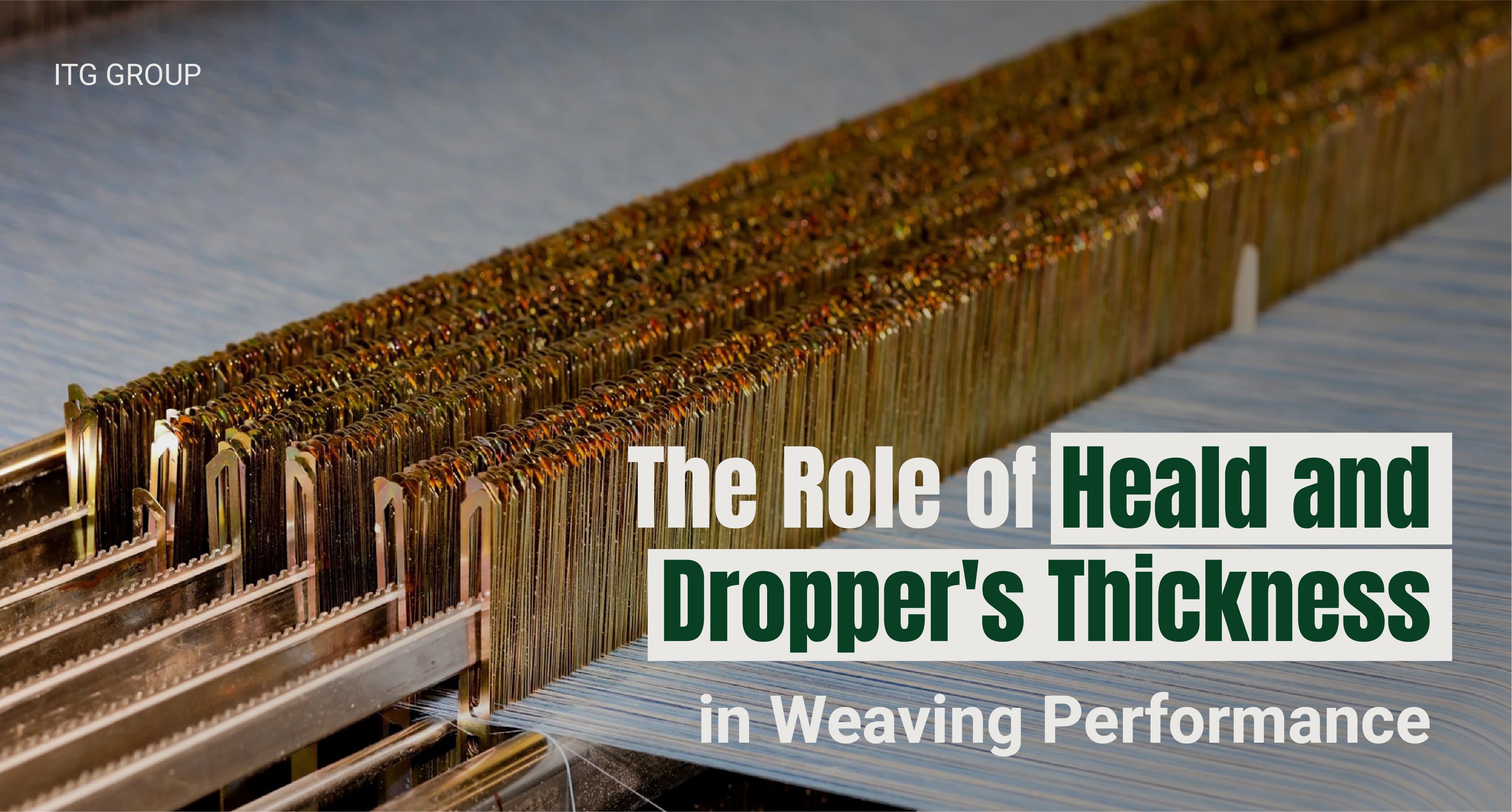
The Role of Heald and Dropper's Thickness in Weaving Performance
In weaving, precision is not only defined by machines, but by the smallest components guiding every yarn. Among them, healds and droppers play a critical role in controlling yarn movement, tension, and break detection. One often overlooked factor in their performance is thickness—both in the mail-eye (eyelet) and in the overall lamella structure.
The thickness of a heald directly influences how the yarn interacts with the loom. A thinner mail-eye reduces friction, allowing smoother yarn passage and minimizing filament damage. This is especially important when working with fine or delicate yarns, where excessive friction can lead to breaks, irregularities, or quality defects.
Conversely, thicker healds provide greater mechanical strength and stability. This is essential in high-speed weaving or when processing coarser yarns, where components are exposed to higher tension and continuous mechanical stress. In practice, thickness can vary significantly—ranging from approximately 0.2 mm to 0.8 mm depending on the application, enabling manufacturers to adapt to different production conditions .
Droppers follow a similar principle. Their thickness directly impacts the sensitivity of warp stop motion systems. Thinner droppers can react faster to yarn breakage, improving detection accuracy and reducing fabric defects. Meanwhile, thicker droppers offer increased durability in demanding environments where resistance to wear is critical.
Surface quality also plays a key role. Smooth, abrasion-resistant eyelets reduce yarn damage and help maintain consistent fabric quality over long production runs. Combined with the right thickness, this ensures an optimal balance between performance and durability.
Ultimately, selecting the correct thickness is not a minor technical detail—it is a strategic decision. It affects loom efficiency, yarn integrity, maintenance frequency, and final fabric quality.
For manufacturers looking to optimize their weaving processes, understanding these variables is essential. This is where working with specialized partners and high-quality components becomes a key advantage.

- 纺织业
- Mar 23, 2026
High-Performance Braiding for Marine Applications
The maritime and fishing sector is not a seasonal niche or a passing trend; it is a structural industry built on critical operational infrastructure. Mooring ropes, large-diameter hawsers, and industrial fishing nets sustain vessels, port operations, and aquaculture systems worldwide. This permanent dependency makes the segment a technical and commercial opportunity that goes far beyond traditional textile markets.
From a market perspective, the data confirms its relevance. The global fishing nets market was valued at approximately US $1.67 billion in 2024 and is projected to grow at a compound annual growth rate (CAGR) of around 4.6% through 2034, driven by the expansion of commercial aquaculture and the increasing adoption of high-performance synthetic nets. This figure reflects only the fishing net segment and does not include mooring ropes, industrial hawsers, and other maritime applications, indicating that the total market linked to marine braided products is significantly larger.
Beyond its size, the attractiveness of this industry lies in its structural demand. Nets degrade due to constant abrasion and prolonged exposure to saline environments. Mooring ropes lose strength over time because of mechanical fatigue. Vessels require continuous maintenance. This dynamic creates consistent replacement cycles and lower volatility compared to textile markets driven by discretionary consumption.
The economic opportunity is directly connected to technical capability. Not all braiding machines are designed to manufacture competitive maritime products. Producing hawsers and large-diameter ropes requires reinforced frames, stable transmission systems, and sufficient motor power to maintain uniform tension in structures that can exceed 80 mm in diameter. In addition, the number of spindles directly affects braid density, improving load distribution and abrasion resistance—critical factors when products must withstand high dynamic loads.
The sector has also evolved toward high-performance synthetic fibers such as high-tenacity polyester, industrial nylon, technical polypropylene, and ultra-high-modulus fibers. These materials are progressively replacing metallic solutions in certain applications due to their lower weight and superior corrosion resistance. However, they require precise tension control and mechanical stability during the braiding process to preserve their structural properties.
In this market, purchasing decisions are based on performance, durability, and operational safety. This reduces price-only competition and enables stronger margins compared to conventional textile applications. The combination of application value, technical entry barriers, and structural demand creates favorable conditions for solid returns when supported by the appropriate production capabilities.
Braiding machines designed specifically for rope, hawser, and industrial maritime applications make it possible to participate competitively in this segment. In this context, the specialized solutions available within the ITG Group portfolio respond directly to the technical demands of the maritime and fishing industry, integrating large-diameter capacity, high spindle density, and operational stability for high-performance applications.
- 纺织业
- Feb 17, 2026
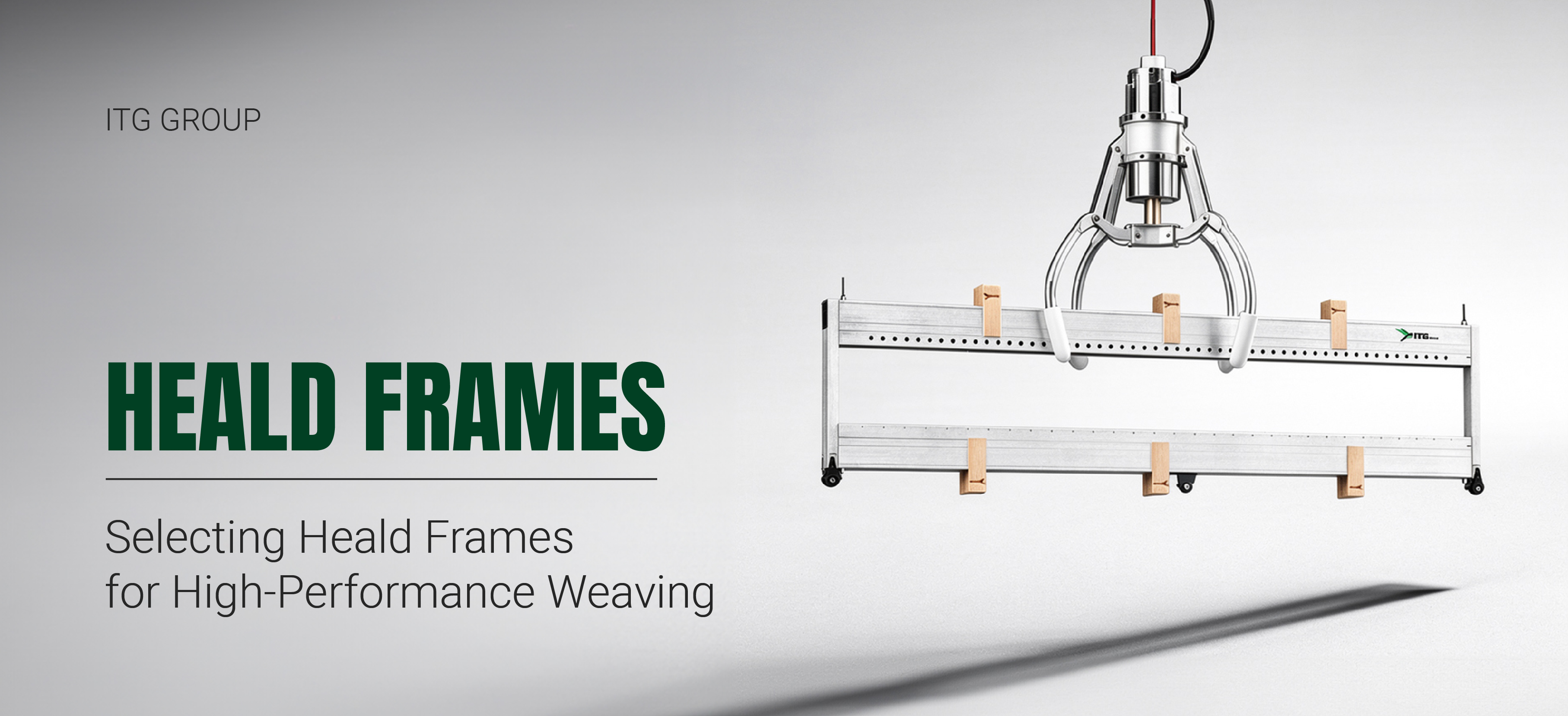
Selecting Heald Frames for High-Performance Weaving
When investing in weaving equipment, heald frames are often underestimated. However, experienced textile professionals know that the performance, stability, and longevity of a loom depend heavily on the quality of its frames. Choosing the right heald frames is not just a technical decision — it is a strategic one that directly affects fabric quality, machine efficiency, and operating costs.
One of the first factors to consider is material quality. Heald frames must withstand continuous motion, tension, and vibration, especially in modern high-speed looms. Frames made from high-grade aluminum alloys or reinforced materials offer the best balance between strength and weight. A lighter frame reduces inertia, allowing smoother movement and higher operating speeds, while sufficient rigidity prevents deformation over time.
Another critical aspect is dimensional accuracy and structural stability. Poorly manufactured frames can warp or lose alignment, leading to uneven shed formation. This results in fabric defects, increased yarn breakage, and unnecessary stress on other loom components. Precision manufacturing and strict tolerances ensure consistent performance, even under demanding weaving conditions.
Surface finish and assembly quality also play an important role. Smooth surfaces reduce friction and wear, especially where frames interact with healds and droppers. High-quality welding, fastening, and joint design prevent loosening or micro-vibrations that can compromise fabric consistency and machine reliability over long production runs.
Compatibility is another key consideration. Heald frames must be engineered to match the specific loom type — whether rapier, air-jet, or projectile — as well as the operating speed, fabric style, and tension requirements of each application. Proper compatibility ensures stable motion, accurate shedding, and reduced mechanical stress, allowing the loom to operate efficiently without unnecessary vibration, adjustments, or premature wear. Frames that are correctly matched to the loom and fabric perform more reliably and support consistent production over long runs.
Maintenance and service life should not be overlooked. Frames designed with durability in mind reduce the frequency of replacements and maintenance interventions. Over time, this translates into lower operating costs, fewer unplanned stoppages, and more stable production schedules — all essential for competitive textile manufacturing.
The qualities outlined above — material strength, structural stability, dimensional precision, compatibility, and long-term durability — are exactly the principles behind the heald frames offered by ITG Group. Designed to perform in modern, high-speed weaving environments, ITG frames are compatible with leading loom brands such as Toyota, Tsudakoma, and Picanol, meeting the expectations of experienced textile producers. By prioritizing reliability, stability, and precise manufacturing, ITG Group’s heald frame solutions support consistent fabric quality and dependable production, day after day.